Quick Answer
Muay Thai, the 'art of eight limbs', uses fists, elbows, knees and shins, plus clinch work. Beginners start with stance, punches, the roundhouse kick and conditioning. Spartacus does not run a Muay Thai programme; its Kick Boxing and Boxing classes build the same striking foundations.
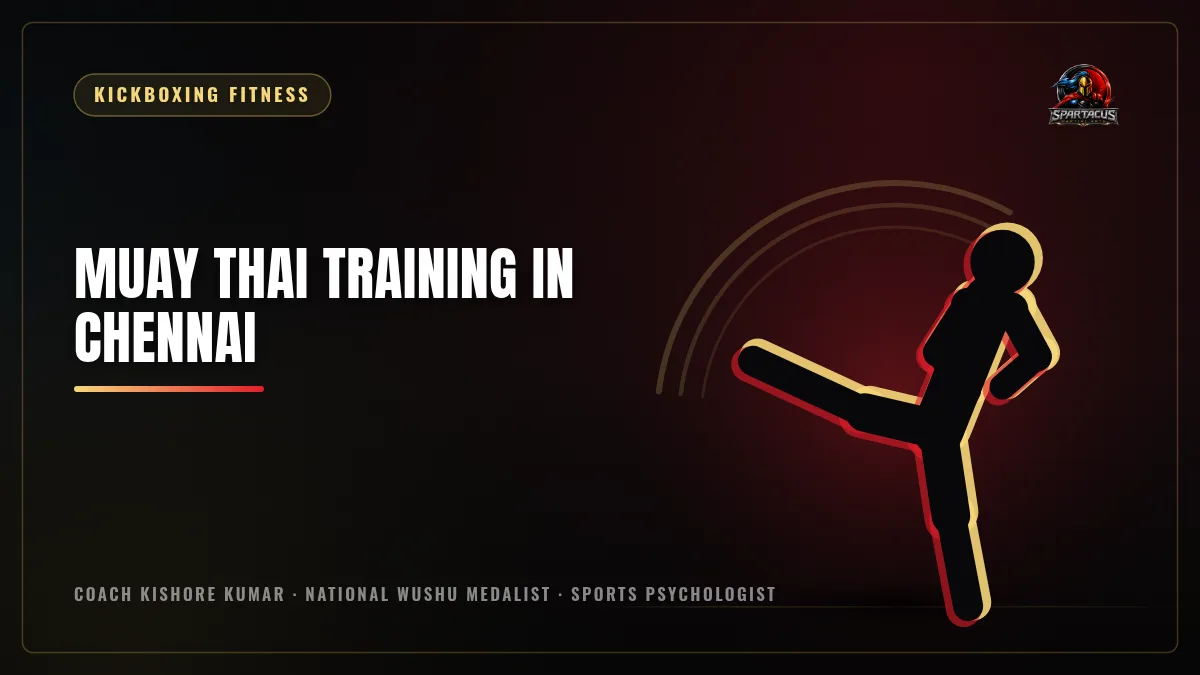
Muay Thai, the "art of eight limbs", uses punches, kicks, elbows and knees. It is Thailand's national sport, a powerful striking art, and one of the most demanding conditioning workouts in the world. This guide explains what Muay Thai is, how it differs from kickboxing and boxing, what beginner training looks like, and how to start building the right foundation in Chennai.
Why is it called the "art of eight limbs"?
Boxing uses two points of contact — the fists. Kickboxing uses four — fists and feet. Muay Thai uses eight: fists, elbows, knees and shins. It also includes the clinch, a standing grappling position where fighters control each other's head and arms to land knees and off-balance their opponent.
What are the core Muay Thai techniques?
- Punches — jab, cross, hook and uppercut, similar to boxing.
- Roundhouse kick — thrown with the shin and a full hip rotation; the signature technique of the art.
- Teep — a push kick with the ball of the foot, used to keep distance and break rhythm.
- Knees — straight knees and curving knees, often from the clinch.
- Elbows — short, sharp strikes used at very close range.
- Defence — blocking kicks with the shin ("checking"), parrying punches, and controlling distance.
What does beginner training look like?
Beginners do not start with elbows and hard clinch work. A sensible progression looks like this:
- Stance, guard and footwork — Muay Thai's stance is more upright than boxing so you can check kicks.
- Punches and the roundhouse kick — drilled slowly for balance and hip rotation before power.
- Teeps and basic knees — on pads and bags.
- Pad rounds — combinations with a coach holding pads.
- Conditioning — skipping, running, core work and bag rounds.
- Clinch and elbows — introduced gradually, with control, once fundamentals are solid.
Everything is introduced safely and gradually. Sparring, if a student chooses it, comes much later and is always controlled.
Benefits of Muay Thai-style training
- Elite conditioning — rounds of kicks, knees and punches are extremely demanding interval training.
- Power from the hips — Muay Thai teaches you to rotate your whole body into techniques.
- Toughness and composure — staying calm and technical when tired is a mental skill as much as a physical one.
- Practical striking — a full toolset from long range to close range.
- Confidence and stress relief — few workouts leave you feeling as capable.
Muay Thai vs kickboxing vs boxing
| Boxing | Kickboxing | Muay Thai | |
|---|---|---|---|
| Weapons | Fists | Fists, feet (some rules: knees) | Fists, elbows, knees, shins |
| Clinch | Broken up quickly | Limited | Central part of the art |
| Stance | Low, mobile | Balanced | Upright, to check kicks |
| Beginner learning curve | Fastest to start | Moderate | Most to learn |
For many beginners, kickboxing or boxing is the easiest entry point, and the skills carry straight over if you later focus on Muay Thai. Compare them in our kickboxing guide and our boxing guide.
Is Muay Thai good for self-defence?
Its striking and clinch skills are highly practical at close range. But, as with every art, self-defence also depends on awareness, distance and the decision to leave early — read why self-defence starts before the fight.
What gear will you need?
Hand wraps and gloves first, then shin guards and a mouthguard once partner work begins. Muay Thai shorts are traditional, but comfortable sports clothing is fine for beginners.
Starting your striking foundation at Spartacus
Spartacus's Kick Boxing and Boxing programs build the striking foundations Muay Thai is built on — stance, guard, footwork, punches, kicks and conditioning — under Coach Kishore. If Muay Thai specifically is your goal, mention it when you get in touch so Coach Kishore can advise you on the right batch and pathway. No experience needed; beginners start with the fundamentals. book a free trial class or ask class details on WhatsApp.